


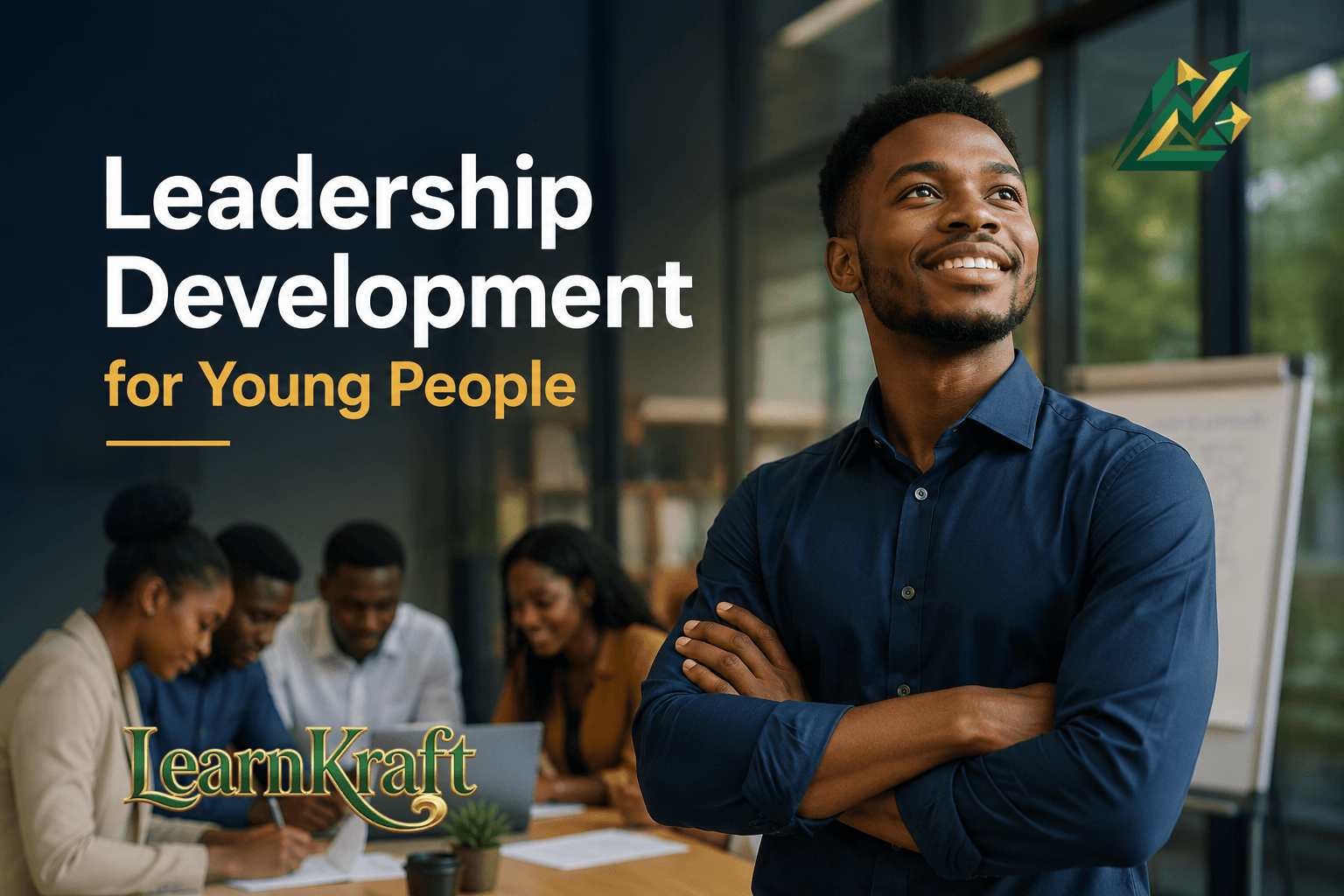
Leadership is often associated with people who hold positions of authority—chief executives, elected officials, school principals, or managers. While these individuals may be leaders, leadership itself is much broader than a job title.
True leadership begins with influence, responsibility, and the willingness to serve others. It is demonstrated through everyday actions, ethical decisions, and the ability to inspire positive change.
For young people, leadership development is not something to postpone until later in life. It is a lifelong journey that begins with developing the habits, values, and skills needed to make meaningful contributions at school, in the workplace, and within the community.
In today's rapidly changing world, employers, educational institutions, nonprofit organizations, and communities increasingly seek individuals who can think critically, communicate effectively, solve problems, collaborate with others, and lead with integrity.
At LearnKraft Empowerment Foundation, we believe that leadership is not reserved for a select few. Every young person has the potential to become a positive influence when equipped with the right education, mentorship, practical experiences, and opportunities for growth.
What Is Leadership Development?
Leadership development is the continuous process of building the knowledge, skills, character, and confidence needed to guide, inspire, and positively influence others.
It goes beyond learning how to manage people. It involves becoming someone others can trust, respect, and rely upon.
Leadership development helps young people strengthen:
Communication skills
Decision-making ability
Emotional intelligence
Accountability
Teamwork
Problem-solving
Integrity
Resilience
Vision and strategic thinking
These qualities remain valuable regardless of career path or profession.
Why Leadership Matters More Than Ever
The challenges facing today's world require thoughtful and ethical leaders.
Communities need people who can solve problems collaboratively.
Organizations need employees who take initiative rather than waiting for instructions.
Entrepreneurs need resilience and vision to build sustainable businesses.
Schools need students who encourage and support their peers.
Families benefit from young people who demonstrate responsibility and compassion.
Leadership is no longer optional—it is becoming an essential life skill.
Why Young People Should Begin Developing Leadership Early
Leadership is built gradually through experience, reflection, and consistent practice.
Developing leadership early allows young people to:
Build confidence before entering the workforce.
Develop stronger communication skills.
Learn to work effectively with diverse teams.
Handle challenges with maturity.
Make thoughtful decisions.
Inspire others through positive actions.
Prepare for future career opportunities.
Like any valuable skill, leadership becomes stronger with practice.
1. Leadership Begins with Self-Leadership
Before leading others, young people must first learn to lead themselves.
Self-leadership means taking responsibility for your actions, managing your time effectively, maintaining discipline, and staying committed to personal growth.
Ask yourself:
Do I keep my commitments?
Am I willing to learn from mistakes?
Do I take responsibility when things go wrong?
Do I continually seek improvement?
People who can manage themselves are better prepared to guide others.
2. Develop Strong Communication Skills
Great leaders communicate with clarity, confidence, and empathy.
Effective communication includes:
Listening actively.
Explaining ideas clearly.
Giving constructive feedback.
Asking thoughtful questions.
Resolving disagreements respectfully.
Strong communication builds trust and encourages collaboration.
Whether speaking to classmates, colleagues, mentors, or community members, clear communication strengthens leadership effectiveness.
3. Learn to Solve Problems Instead of Avoiding Them
Every community, workplace, and organization encounters challenges.
Leaders distinguish themselves by looking for solutions rather than focusing only on problems.
Problem-solving requires:
Critical thinking.
Creativity.
Collaboration.
Decision-making.
Adaptability.
Young people who embrace challenges as opportunities to learn become more capable leaders over time.
4. Build Emotional Intelligence
Leadership is as much about understanding people as it is about making decisions.
Emotional intelligence involves:
Self-awareness.
Self-control.
Empathy.
Respect for others.
Conflict resolution.
Leaders who understand emotions create healthier relationships, stronger teams, and more inclusive environments.
5. Take Initiative
Leadership is demonstrated through action.
Instead of waiting for permission to contribute, look for opportunities to make a positive difference.
This could include:
Organizing community projects.
Leading a student initiative.
Mentoring younger students.
Volunteering during outreach programs.
Offering ideas that improve a team.
Initiative shows reliability and commitment.
6. Learn from Mentors
No successful leader grows alone.
Mentors provide guidance, encouragement, and practical wisdom gained through experience.
A mentor can help you:
Recognize your strengths.
Improve areas for growth.
Set realistic goals.
Make informed career decisions.
Build confidence during challenges.
Seeking mentorship demonstrates humility and a willingness to learn.
7. Develop Integrity
Leadership without integrity rarely creates lasting impact.
Integrity means doing the right thing even when no one is watching.
Young leaders demonstrate integrity by:
Being honest.
Keeping promises.
Treating people fairly.
Respecting others.
Accepting responsibility for mistakes.
Trust is one of the most valuable qualities a leader can earn.
8. Embrace Lifelong Learning
The best leaders never stop learning.
Technology, industries, and societies continue changing rapidly.
Continuous learning helps leaders remain informed, adaptable, and effective.
Consider:
Reading books.
Attending seminars.
Taking online courses.
Learning new digital skills.
Seeking constructive feedback.
Growth is a lifelong process.
9. Serve Before You Lead
The most respected leaders understand that leadership is about service, not status.
Servant leadership focuses on helping others succeed.
This may involve:
Supporting team members.
Sharing knowledge.
Encouraging others.
Creating opportunities.
Putting community needs ahead of personal recognition.
People naturally trust leaders who genuinely care about those they serve.
10. Lead with Purpose
Leadership becomes meaningful when it is connected to a clear purpose.
Ask yourself:
What problems do I want to help solve?
What positive impact do I hope to create?
How can my talents benefit my community?
Purpose provides motivation during difficult moments and helps leaders remain focused on long-term goals.
Common Misconceptions About Leadership
Many young people hesitate to see themselves as leaders because of common misconceptions.
"I'm too young to lead."
Leadership has no age requirement. Young people can create meaningful change through responsibility, initiative, and positive influence.
"I need a leadership title."
Leadership is demonstrated through actions, not positions.
"Leaders are born."
Research and experience consistently show that leadership skills can be learned, developed, and strengthened over time.
"Leadership is about being in charge."
Effective leadership is about serving, collaborating, and empowering others.
Practical Ways to Develop Leadership Skills
Leadership grows through experience.
You can begin today by:
Volunteering in community initiatives.
Participating in student organizations.
Leading group projects.
Mentoring younger students.
Joining leadership workshops.
Reading biographies of respected leaders.
Seeking constructive feedback.
Setting personal development goals.
Practicing public speaking.
Taking responsibility for meaningful tasks.
Small, consistent actions build lasting leadership capacity.
How Leadership Supports Career Success
Leadership skills benefit every profession.
Employers increasingly value candidates who can:
Work collaboratively.
Communicate professionally.
Take initiative.
Solve problems.
Adapt to change.
Build positive relationships.
Demonstrate accountability.
Leadership development improves employability while preparing young professionals for future responsibilities.
How LearnKraft Empowerment Foundation Develops Future Leaders
Leadership is central to LearnKraft Empowerment Foundation's mission of empowering youth and underserved communities through education, mentorship, skills development, language learning, scholarship support, and community engagement.
Our programs encourage young people to become confident learners, responsible citizens, ethical professionals, and compassionate community leaders.
By providing access to mentorship, practical learning opportunities, educational guidance, and personal development initiatives, we help young people build the confidence and competence needed to contribute meaningfully wherever they are.
We believe that when young people are empowered to lead with integrity, they create positive change that extends far beyond their own success.
Final Thoughts
The leaders who will shape tomorrow's communities, organizations, and nations are developing their habits today.
Leadership is not about waiting for the perfect opportunity.
It is about choosing, every day, to learn, serve, improve, and inspire.
Every conversation, every challenge, every volunteer experience, every project, and every act of responsibility becomes an opportunity to grow as a leader.
No matter your background or current circumstances, leadership begins with a single decision—to become someone who creates value for others.
The future belongs not simply to those with knowledge, but to those with the courage, character, and commitment to use that knowledge in service of others.
Start developing those qualities today, and your influence will continue to grow throughout your life.
Frequently Asked Questions
What is leadership development?
Leadership development is the ongoing process of building the skills, values, mindset, and confidence needed to positively influence others and contribute effectively in professional, educational, and community settings.
Why is leadership important for young people?
Leadership helps young people develop communication, decision-making, teamwork, resilience, and problem-solving skills that support both career success and community impact.
Can leadership skills be learned?
Yes. Leadership is not limited to natural talent. Through education, mentorship, practical experience, and continuous learning, anyone can strengthen their leadership abilities.
How can students begin developing leadership skills?
Students can develop leadership by volunteering, joining clubs, leading projects, participating in community service, improving communication skills, and seeking guidance from mentors.
Continue Your Leadership Journey
You may also enjoy reading:
10 Essential Skills Every Young Professional Should Develop in 2026
How Young Nigerians Can Build Career Confidence in a Competitive World
How Mentorship Can Transform a Young Person's Future
Building a Growth Mindset for Long-Term Success
About LearnKraft Empowerment Foundation
LearnKraft Empowerment Foundation is an initiative of Oshiobugie Empowerment Foundation dedicated to empowering youth and underserved communities through education, career readiness, mentorship, scholarship support, language learning, community outreach, and responsible pathways to global opportunities. We believe that every young person deserves access to the knowledge, skills, support, and leadership opportunities needed to build a brighter future for themselves and their communities.