


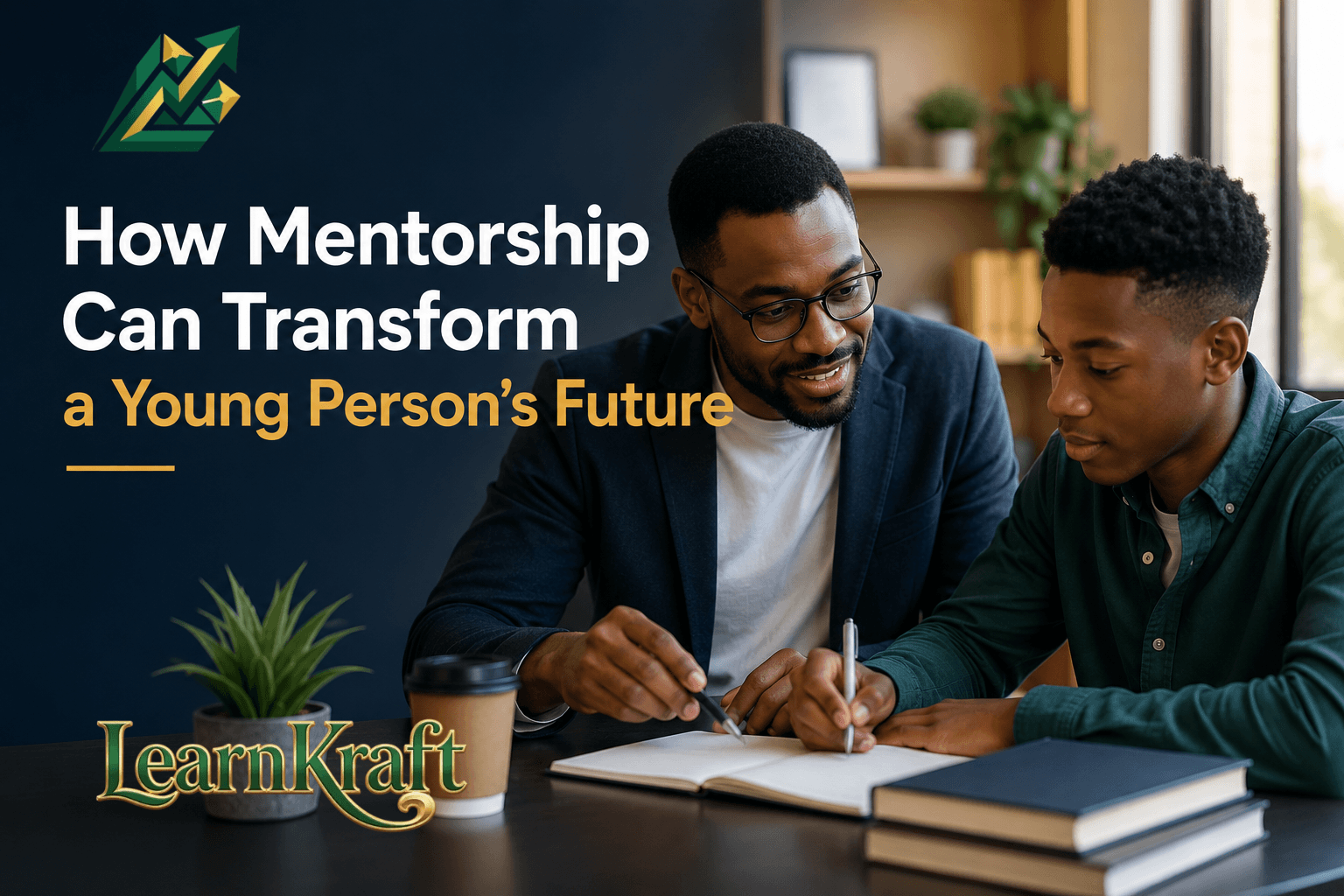
Every successful person has a story.
Behind many of those stories is someone who believed in them before the world noticed their potential.
Sometimes it was a teacher who encouraged them to dream bigger.
Sometimes it was a parent who provided unwavering support.
Sometimes it was a coach, employer, lecturer, community leader, or experienced professional who offered guidance at the right moment.
That person was a mentor.
Mentorship has quietly shaped some of the world's greatest innovators, entrepreneurs, educators, scientists, artists, and community leaders. It remains one of the most powerful tools for unlocking potential because it connects experience with ambition.
For many young people, talent alone is not enough. Success often depends on having access to guidance, encouragement, practical knowledge, and opportunities to learn from those who have already walked a similar path.
At LearnKraft Empowerment Foundation, we believe mentorship is more than advice—it is a relationship that builds confidence, develops character, expands opportunities, and empowers young people to create meaningful futures through education, skills development, leadership, and lifelong learning.
What Is Mentorship?
Mentorship is a purposeful relationship in which a more experienced individual supports the personal, academic, or professional development of another person.
A mentor does not make decisions for you.
Instead, they help you think more clearly, avoid common mistakes, identify opportunities, and continue growing.
A mentor may:
Share practical knowledge.
Provide honest feedback.
Encourage personal growth.
Introduce valuable perspectives.
Offer career guidance.
Help build confidence.
Challenge limiting beliefs.
Encourage accountability.
The goal of mentorship is not dependence—it is empowerment.
A good mentor equips you to make informed decisions and eventually become a mentor to others.
Why Mentorship Matters More Than Ever
Today's world presents young people with more opportunities than ever before—but also more uncertainty.
Rapid technological change, increased competition, evolving career paths, and information overload can make important decisions feel overwhelming.
Mentorship helps young people navigate these challenges with greater clarity.
Instead of relying solely on trial and error, mentees gain insights from someone who has already faced similar experiences.
This guidance saves time, reduces avoidable mistakes, and builds confidence.
The Life-Changing Benefits of Mentorship
1. Mentorship Builds Confidence
Many young people underestimate their own abilities.
A mentor helps identify strengths that may not yet be obvious.
Constructive encouragement helps transform self-doubt into self-belief.
Confidence grows when someone trustworthy reminds you that growth is possible.
2. Mentorship Provides Direction
One of the biggest challenges facing young people is uncertainty.
Questions such as:
Which career should I pursue?
What skills should I develop?
How do I prepare for future opportunities?
What mistakes should I avoid?
are easier to navigate with guidance from someone who has practical experience.
Mentorship provides direction without removing personal responsibility.
3. Mentorship Accelerates Learning
Experience is an excellent teacher—but learning from someone else's experience can often be even more efficient.
Mentors share lessons that would otherwise take years to discover independently.
This accelerates both personal and professional development.
4. Mentorship Encourages Accountability
Goals are easier to achieve when someone regularly encourages progress.
Mentors help mentees:
Stay committed.
Reflect honestly.
Improve consistently.
Maintain focus during challenges.
Accountability transforms intentions into action.
5. Mentorship Develops Leadership
Leadership begins with learning.
Many effective leaders first learned by observing mentors who demonstrated integrity, service, humility, and responsibility.
Mentorship helps young people become leaders who influence others positively.
6. Mentorship Expands Opportunities
Mentors often introduce mentees to:
Professional networks.
Educational opportunities.
Volunteer experiences.
Leadership programs.
Skill development resources.
While mentors cannot guarantee opportunities, they often help young people recognize and prepare for them.
Preparation remains the foundation of opportunity.
7. Mentorship Strengthens Character
True success involves more than academic achievement or career advancement.
Mentorship helps young people develop:
Integrity.
Discipline.
Resilience.
Empathy.
Responsibility.
Respect for others.
Character creates the foundation for sustainable success.
What Makes a Good Mentor?
Not every experienced person is automatically a good mentor.
Effective mentors demonstrate:
Integrity.
Patience.
Genuine interest in others.
Strong listening skills.
Professional experience.
Humility.
Encouragement balanced with honesty.
A commitment to lifelong learning.
A mentor should inspire growth rather than dependence.
How to Find the Right Mentor
Mentorship opportunities often exist closer than many people realize.
Potential mentors may include:
Teachers.
Lecturers.
Community leaders.
Faith leaders.
Employers.
Experienced colleagues.
Alumni.
Professionals within your field.
Volunteer coordinators.
When approaching a potential mentor:
Be respectful.
Explain why you admire their work.
Be clear about your goals.
Show willingness to learn.
Respect their time.
Meaningful mentorship develops gradually through trust and consistency.
How to Be a Great Mentee
Successful mentorship depends on both people.
Young people can maximize mentorship by:
Be Curious
Ask thoughtful questions.
Seek understanding rather than quick answers.
Be Open to Feedback
Growth often begins with constructive criticism.
Receive feedback with humility.
Take Initiative
Do not expect mentors to solve every problem.
Apply what you learn.
Take responsibility for your own development.
Be Reliable
Keep appointments.
Follow through on commitments.
Respect your mentor's time.
Express Gratitude
A simple thank you strengthens relationships and demonstrates maturity.
Common Misconceptions About Mentorship
"Only struggling people need mentors."
Even highly successful individuals continue learning from mentors throughout their careers.
"Mentors should provide jobs."
Mentors offer guidance, encouragement, and perspective—not guaranteed employment or opportunities.
"One mentor should help with everything."
Different mentors can support different areas of life, including education, leadership, entrepreneurship, faith, personal development, or career planning.
"Mentorship is only for professionals."
Young people at every stage—from secondary school students to university graduates—can benefit from mentorship.
How Mentorship Supports Career Readiness
Career readiness involves much more than qualifications.
Employers increasingly value candidates who demonstrate professionalism, communication, adaptability, emotional intelligence, and leadership.
Mentors help young people strengthen these qualities by providing practical advice, constructive feedback, and real-world insights.
Mentorship also helps individuals build confidence before interviews, improve workplace communication, develop professional habits, and make informed career decisions.
Mentorship Creates a Ripple Effect
The impact of mentorship extends beyond one individual.
A young person who receives guidance today often becomes someone who supports others tomorrow.
This creates stronger families.
Stronger workplaces.
Stronger communities.
And ultimately, stronger societies.
Mentorship is one of the most sustainable investments in human development because its influence continues across generations.
How LearnKraft Empowerment Foundation Uses Mentorship to Empower Young People
At LearnKraft Empowerment Foundation, mentorship is woven into our vision of empowering young people through education, skills development, leadership, scholarship support, language learning, and community engagement.
We believe that every young person deserves access to guidance that builds confidence, encourages lifelong learning, and prepares them to navigate opportunities responsibly.
Our mentorship initiatives aim to create supportive relationships where young people can develop practical skills, strengthen character, discover their potential, and prepare for meaningful careers and purposeful lives.
By connecting learning with encouragement and accountability, mentorship becomes a catalyst for lasting transformation.
Final Thoughts
No one succeeds entirely alone.
Behind every confident professional, respected leader, or impactful changemaker is a journey shaped by learning from others.
Mentorship does not remove challenges.
It equips people to face those challenges with greater wisdom, confidence, and resilience.
Whether you are still in school, preparing for university, beginning your career, or exploring new opportunities, finding the right mentor may become one of the most valuable decisions you ever make.
And as you continue growing, remember that the greatest measure of successful mentorship is not simply what you receive—it is your willingness to one day guide someone else.
Because empowered people empower people.
Frequently Asked Questions
What is mentorship?
Mentorship is a supportive relationship in which an experienced individual helps another person grow through guidance, encouragement, knowledge sharing, and constructive feedback.
Why is mentorship important for young people?
Mentorship helps young people build confidence, develop leadership skills, make informed decisions, strengthen professional skills, and prepare for future opportunities.
How can I find a mentor?
You can find mentors through schools, universities, workplaces, volunteer organizations, community groups, professional associations, or trusted leaders whose values and experience align with your goals.
Can mentorship guarantee career success?
No. Mentorship does not guarantee employment or specific outcomes. However, it helps young people prepare more effectively by building skills, confidence, and informed decision-making.
Continue Your Personal Development Journey
You may also enjoy reading:
How Young Nigerians Can Build Career Confidence in a Competitive World
10 Essential Skills Every Young Professional Should Develop in 2026
The Role of Personal Development in Career Success
About LearnKraft Empowerment Foundation
LearnKraft Empowerment Foundation, an initiative of Oshiobugie Empowerment Foundation, is committed to empowering youth and underserved communities through education, mentorship, scholarship support, leadership development, language learning, skills development, and community outreach. Our mission is to help individuals build the confidence, knowledge, and practical capabilities needed to create meaningful opportunities and become positive contributors to their communities.